Showing posts with label ducks. Show all posts

Wednesday, 17 December 2014

Pictures of Domestic Ducks: Aylesbury, Blue Swedish and Rouen Ducks

Bird Pictures: Unusual Ducks along Bingley Canal: Young Aylesbury Ducks, Blue Swedish Duck, Rouen Duck

These are domestic birds that have either escapeed or been released from poultry keepers. Now they live wild along my stretch of the Leeds to Liverpool Canal.

Aylesbury Ducks, Blue Swedish Duck, Rouen Duck
Birding and bird photography is not an exact science: none of the birds have read the expert's books so surprises and mysteries are not uncommon. This photo journal documents, with original duck pictures, just one such mystery. Who's yer mama? Who's yer papa? 

Saturday, 6 September 2014

Birds on Bright Water

duck on moving water
Bird of Bright Water by annmackiemiller
Duck on moving water

Birds on Bright Water


As you know I love waterfowl but as often as not I feel as if I am photographing the water. I love to see the different effects of light, reflections and movement that make backgrounds to my photos. I'm experimenting with putting a few together on video - Tell me what you think?


canada goose on water
Canada goose on water by annmackiemiller

moorhen on water
moorhen on water by annmackiemiller


Saturday, 30 August 2014

Shelduck and Shelduck Chicks

Meet the Shelduck and chicks

photography copyright annmackiemiller 2014
Adult Shelduck photography by annmackiemiller: copyright 2014
Shelducks are probably one of the most recognisable birds in the UK. They are certainly colourful enough! In flight they have wonderful black lined wings with white fills, a distinctive orange collar, white neck, black head and red bill with a red knob. The female may have a slightly lighter face and bill and lacks the bill knob. The tail is mainly white lined with black and orange.

Look for them in estuaries, marsh land, mud flats and nesting in coastal grasslands. Some folk think they are a cross between a duck and a goose - maybe they were at one time in the very distant past but they are firmly in the duck family now.
adult shelduck sleeping
Adult Shelduck asleep


adult shelduck in flight
Shelduck in flight by annmackiemiller

What do Shelduck eat?

shelduck chicks
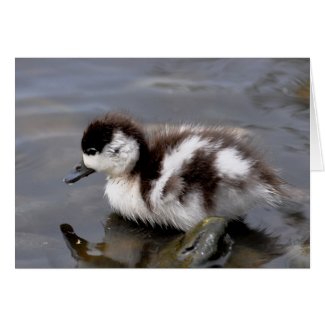
Shelduck chicks
You'll see Shelduck sweeping their bills through mud out on the estuary. They are filtering the mud for snails and other crustaceans and they are not averse to the odd insect or two. You'll even see them stirring up stones with their feet to get at anything that is underneath.
shelduck chick
This shelduck chick has already learned to stir up stones on the pond floor to get to anything underneath.

Shelduck Breeding

These ducks tend to be monogamous and the female only makes the nest. This can be down a handy rabbit hole or among the grass in the dunes. They line the nest with down plucked from their belly. They lay 8-15 eggs and the female only sits on them though the male is usually nearby. The eggs will hatch in around a month. The chicks of many broods may form large nurseries. They are independent around 2 months old. 

adult shelduck with chicks
Adult shelduck with chicks
adult shelduck with chicks

Migration 
Some in Southern Britain will stay year long but many migrate to Europe where they moult. Like all ducks, they will be flightless until their new feathers grow in. They return with bright new breeding plumage. 


Shelduck chick gallery


shelduck chick

shelduck chick

shelduck chick

shelduck chicks

shelduck chick

shelduck chicks

shelduck chicks

shelduck chicks


Shelduck photos available as note cards and greeting cards - follow the link to my zazzle store. 


Sunday, 26 June 2011

Checking in on Sunday

I managed down to the canal on Friday but I haven't processed the photos yet - will do that soon.
But I also stopped on my way home last night near 10pm and that was interesting.  All the white geese were down at the canal as was Smudge with partner.  I read again how mallards don't keep the same mates year on year but these two are definately bonded.  No sign of babies though.  I don't know if she has abandoned them further up the canal.  I was also reading that isn't unsual with mallards as is adoption.  The same article talked about them laying eggs in other ducks nest too which I hadn't heard of before.

Also spotted for the first time in months - BOTH dark Blue Swedish ducks and the Splodged Swedish Duck together.  I really thought one had gone for good.  No sign of the youngsters at Greenhill last night but I did see them along at the boat yard on Friday and they look to be thriving.  I'm just about to write an article on them over on Hubpages.  (link when it is done)

Photography by AnnMackieMiller: copyright 2011
Aylesbury ducklings, Blue Swedish duckling and hybrid Blue  Swedish /Mallard duckling
about 4 weeks old


Also on Greenhill last night were TweddleDum and TweddleDee in company with the Swedish Brothers. On Friday the injured one was on its own and just sitting at the boat yard, but last night it looked a bit more mobile.  There is hope yet.

Just as I was leaving the three families of Canada Geese came down the canal and out to roost on Greenhill.  If we lose this site - well it will just be heartbreaking.

Tuesday, 31 May 2011

Along the canal today (and yesterday)

I arrived just in time for the moorhen's shift change this evening.  I had sort of been aware that they groom each other but this was the first time I had seen this as part of a greeting ritual.  The male approached the nest where the female was sitting on eggs.  She spent several minutes giving him a good brush up before they swapped places.


Look who's turned up on Greenhill.  The big goofy looking Toulous goose and partner.  I haven't seen them here since about February.

The Chinese goose family look as if they have lost 5 goslings, and the other large brood a couple too.  Or... the other two were with the second female????  Certainly out on the water there were only the two adults.

The last two moorhen juveniles are still much in evidence but along the canal in general not many of the chicks from first broods have survived at all.  I'm now seeing adults on their own again which suggests the partner is sitting on second broods.
I wonder if the same goes for the mallards?  Very few ducklings have survived this year.  Each day there does seem to be a new lot of hatchlings.  The females are a bit conspicuous by their absence and the males are beginning their moult.  Some of them are looking distinctively patchy.  I imagine the females who have been tormented by the batchelors will be breathing a sigh of relief when the males become flightless for 3 weeks.  It might give them the chance to regrow the feathers on the bald patches at the back of their necks where the males have been grabbing them.

Here are some gosling pictures - some little ones and one not so little one now.


Monday, 14 February 2011

Going Goofy on Valentine's Day

The facial expression says it all...

love makes goofs or us all
As one would expect, lots of pairing off today at the canal.

brown-headed male mallard and mate
The Greenhill geese were quite spread out: some (with Canada geese) along in the field above the weir (they spooted the plastic bag with food but couldn't figure out how to get to it), more in the field beside the allotments (also with Canada geese), some in the canal near the bramble field and the rest along at Greenhill.

above the weir, below Micklethwaite

I spotted one moorhen at the weir another at the coppice and two along at Micklethwaite Wharf though they didn't come close to each other while I was there.  It is early days I suppose. 
No sign of the swans or of the female goosander - they are very nervous birds so maybe she has flown.
TweddleDum and TweedleDee were out at Micklethwaite Wharf with VERY dirty beaks and the Swedish ducks gave me an excellent display of field running on the Greenhill.

Swedish ducks doing a runner
I'll be off for a few days while my camera gets cleaned, so hope nothing monumental happens meantime.

Saturday, 12 February 2011

Along the canal on Friday

On my dawdle along the canal today (Friday) I met most of the usual suspects but no swans.  Smudge was there with her beau, Mama Mallard with hers, the three Swedish ducks were near the hawthorn tree at Micklethwaite Wharf, half the geese were grazing in the high field on Greenfield while the other half were in the Greenfield on the other side of the allotments together with some Canada geese.  TweddleDum and TweddleDee the big white domestic ducks, were doing their synchronised swimming thing

while there were two new ducks, obvious escapees from the allotments.  A pair of large white ducks were sitting outside the fence of the allotments.  They look young and a bit like Maldovy ducks (thanks to my facebook/squidoo pals), but I'm not sure.  I suspect they might be male and I suspect but don't know that they have been released as surplus to requirements, better than being killed!
I also spotted a female goosander.  Sadly just the one, so no goosander babies though she did seem to be a bit friendly with a couple of male mallards.  I know mallards cross-breed but I don’t know if goosanders do.  Certainly goosanders are gregarious so maybe she just needed to be with other ducks. 

On my way back, I was just thinking that I had seen three of our usual four territorial moorhens when I discover there are now a pair of them at Micklethwaite Wharf.  More on that in the next blog.  


Saturday, 29 January 2011

Introducing you to the Coppice Pond: St Ives Estate Bingley


We had a light dusting of snow overnight but this morning (Friday) the sun came out.  It was a beautiful day: sun shining on snow, so perfect for a visit to St Ives.  St Ives is a huge estate just outside Bingley that is now open to the public.  Needless to say my favourite place is a lake known as Coppice Pond. 


It is home to a resident flock of noisy Canada geese.  The geese are managed by a ranger so any eggs laid are coated with petrolium jelly to prevent them from hatching.  These are the same Canada geese that pay us visits down at Micklethwaite Wharf and last year one pair mated and nested at Greenhill and they produced seven goslings who all survived.  I had great fun watching them getting flight lessons on the Greenhill.  Hopefully we will get more this year.


There is also this interesting little family. 
Two large white domestic ducks make their home there, both males I think and last year one mated with a female mallard and produced this fella.  I'm pretty sure the hybrid is a male because of the green sploches on his head but I could be wrong.  If I don't know something I feel quite justified in making it up :0) I'm no expert after all and will never claim to be.  I am fascinated by bird behaviour and these four stick very closely together.  I think the female will probably mate again this year judging by her behaviour.


It is always a joy to watch and listen to the coots - I just love those huge feet


The Coppice pond also has moorhens plus I saw a couple of male gooseanders but not close enough to photograph. 

The feeding station for woodland birds had a delightful colony of grey squirrels.  Unfortunately they were chased away by blooming dogs let loose by careless owners.  I saw loads of robins, some chaffinches and blackbirds and various tits.  I didn't stay there long as Big Bertha, my Sigma 50-500mm lens, was playing up and I was sulking at having to use the little lens.  I have yet to take a decent photo with the big lens but ONE day I will master it!  Watch this space. 


Wednesday, 26 January 2011

Welcome to my new blog: Watching Bingley Birds

As you will gather, I am a keen birdwatching and photographer.  I prefer water birds and am lucky enough to live near the Leeds to Liverpool canal, near Bingley in West Yorkshire, England. 

This year I plan to document in words and photographs the wonderful array of birds in this part of the world.  I am particularly interested in bird behaviour so I hope I can capture the essense of what makes these creatures tick.

To start I need to introduce you to my neighbourhood.  There are three main areas I tend to go to most around here:

The Leeds to Liverpool canal at the bottom of my road - this is a stretch less than two miles long but teeming with life.  For me it starts at the top of the Five Rise Locks at Bingley.  This is a series of locks that raise and lower barges and canal boats.  Yorkshire is hilly - and the canal was a major feat of engineering in tackling how to get these heavy industrial boats up and down the hills.  You can read more about the canal in my lens on Squidoo -  Walking the Towpath
This stretch of canal is the most important for me but I do visit other stretches of the canal so will include sightings along there from time to time.

Coppice Pond on the St Ives Estate, Bingley - this is a large estate near Bingley that is now open to the public.  On part of it is the Coppice Pond, home to a large flock of Canada geese as well as coots, moorhens and so on.  The ranger has set up a feeding station for woodland birds so I often go up to watch them and the squirrels.

Myrtle Park in the centre of Bingley - this public park has the Aire River running through it.  So far I haven't studied the wildlife there much but mean to rectify that this year.


I spend most of my time at the canal.  Last year I was lucky enough to follow several wildfowl families through the breeding season with all the ups and downs that entailed.  I produced several small photobooks of their stories on Blurb.com and make several lenses on Squidoo.  This year, I mean to do even better and this blog is the start.  Part of it will be a diary in words and pictures, and part will be articles on the various birds I come across.  I may even throw in a little history now and then!

You can find the complete list of my storybook photography lenses that cover last year's stories of my favourite wildfowl families CLICK HERE - on Squidoo